Showing posts with label health. Show all posts

Monday, September 19, 2011

Injurious Harm

Found here.
Wife Megan and I have been preparing for a couple of aerial silks performances this weekend at The Gowanus Ballroom (henceforward, "TGB"). TGB is a very cool space - a former factory that now serves double-duty as a metal shop and an art gallery, and it would seem they're eager to have as much aerial performance in it as they can get as well. I've been looking forward to this opportunity in particular, as it would be my first professional aerial gig, and I really love the space itself.

Unfortunately, for whatever reason, I've hurt myself a little too badly to carry on.

I'm fine. I mean, I'M FINE. I feel a little silly, in fact, since our teacher very recently had a serious injury that's keeping her off the silks. (Hers had almost nothing to do with the inherent dangers we tend to think of for climbing arts - while she was standing on the ground, a rigging hook fell from the ceiling onto her hand, which is miraculously unbroken but very swollen.) By comparison, my ailments are exceedingly minor. I have a strained right shoulder, and a tweaked left. Were I in Cirque du Soleil (henceforth, "CdS") or some such company, these would indubitably be suck-it-up injuries.

Well, I'm not in CdS. ("What?" I know: right?) Giving it twelve hours after the second tweaking, in which time I napped, took some pain medication and got a decent rub-down, I made the decision I have the luxury to make. In my experience, the reason these sorts of things happen in threes is not because of some cosmic predestiny or communique, nor because it's funny (though, Dudes: it totally is). No, they come in threes because some moron decides he doesn't have to listen to the world around him. I'll not be that moron.

Today, anyway.

That's not to say I feel good about the decision. Why write about it if I feel smashing? No; even past the call, I'm struggling with it. I don't question it in any rational sense. Hauling myself up and catching myself down a thirty-foot ribbon is not what the doctor ordered for a couple of twinged shoulders, and a bad or even hesitant performance doesn't add to my fellow conspirators' performances in any way. Our fearless leader even made sure we knew going in that the commitment was negotiable for this kind of concern.

What is difficult about this is the lost work that went into rehearsal. What is difficult about this is that this is the second time in a row that a silks performance of mine was compromised by health concerns (see 5/25/11). What's difficult is taking the long view, and returning to the dual considerations that:  1) I might need to give silks a rest for awhile, find something else in the physical arts to study; and  2) I am older than I once was, and that's all I'll ever be, because that's how life works.

Stupid life.

I try not to think about things this way, that I'm getting too old for anything. It makes far more sense to me to think that as I age, I need to keep improving my approach to physical arts so I can work smarter and be prepared and more attuned to my body. Of course, part of the beauty of physical expression is that it can be so pure and independent from analysis. This sets us up for a classic showdown: Body versus Mind. Will Mind's rationale wither under the indomitable impulse-control-problem of Body, or will Body be left baffled, staring into an empty corner at its own mortal shadow whilst Mind proves irrefutably that it is the very construct of reality?! Sunday, SUNDAY, Sunday! Two enter the octagon, only one may leave! Except that, oh, well, they kind of need one another after all so let's all sing kumbaya, ma' lord, oh lord, kumbaya...

Anyway. It's not a complete write-off. When I was last in Scranton I finally retrieved my first pair of stilts, which had taken up residence there for almost two years now. My plan is to perform a sort of metalworker character, a tall guy from a different time dropped into the art space and trying to find his way to Gowanus, unable to recognize that he's already there. It's a theatrically satisfying idea, regardless of how physically simple the act ultimately is.

It's funny. I've been practicing my stilt-walking after work on the odd afternoon since I got the pair back, just taking a walk around the block to reacquaint myself with the sensation. It's difficult to avoid the cliché about bike riding, but there are things I forgot about stilt-walking. Primarily, how taken with it people are. Just carrying the stilts around invites folks to ask questions, and actually walking on them (the stilts; less-so the people) inspires an incredible repetition of jokes and questions. ("How's the weather up there?" has become to me a challenge to make my response as original as possible in contrast.) I engage in this repetition too. My line is, "It's easy. I could teach you in an hour." And it's true. It took me five years to learn to ride a bicycle, and fifty minutes to walk on my own on stilts.

People very rarely take me up on the offer, however. I think I've taught only two folks in nine years. Most people have talked themselves out of it before they've even considered the possibility, which I think is a shame. Sure - you could fall, you could get hurt. Worse, you might even have to give up. The catch is that the best opportunities available are within that risk. It's those painless injuries of never trying that really tear me up.

Thursday, June 30, 2011

Five Hun Dread: The Sacred & Profane

In the waning days of 2006 I started this here 'blog in the interests of exerting a bit more control over  my online presence. It probably speaks volumes to my misconceptions about the Internet that I imagined I could "control" my online presence, but at the time I had just had a website put up for me, and simply wanted to contribute to that effort in a more personal way. After a short time, I found a guiding principle for the 'blog, which I decided would be used to explore and expound upon my efforts to live what I called "The Third Life." That is, a life lived outside of conventional norms and perspectives, one that aspires to be about more than just home and work, that incorporates something else (see 12/19/06, but also, and perhaps more interestingly, 2/21/08).

In the five years since I started the Aviary, one or two things have changed. I've been involved in myriad productions of great variety, including one low-budget sci-fi film and several original collaborations, traveled to and performed in Italy four times, and performed an extended-run NYC Fringe show that I helped develop. I got to play Romeo, well past my freshness date for that particular role. I moved three times, once between Brooklyn and Queens, and I took up aerial silks. Friend Andrew and I dared to experiment with a performance collective.  I've acted, written, choreographed, directed, curated and devised. In that time I also changed day jobs and taught in various capacities, including joining a UK-based corporate training company. Most significantly, my sister moved out of the city, and I married a woman I've known and loved since I was seventeen.

For a little over a month now, my evenings and a significant part of my weekends have been devoted to rehearsals for and performances of a play called Sacred Ground. It was written by my fellow As Far As We Know collaborator, Christina Gorman, and is the first time I've worked with her since we departed that show. Sacred Ground also represents the first naturalistic drama in which I've acted in the city since Lie of the Mind - which, as some may recall, did not garner me the most magnificent of notices. Well, it's only taken me about four years to get over that, and so I've been dutifully applying my craft to a rather down-to-earth, straight-forward drama. And I've enjoyed it. And I'd say I've even done a fairly respectable job.

It was very interesting, returning to a conventional off-off-Broadway rehearsal schedule in NYC. Rehearsals went rather late, and something about that - combined with working with all-new people (other than Christina), and tackling something by which I was more than a little intimidated - came to remind me very poignantly of how I generally existed in my 20s. There was almost literally no stopping, from day job, to rehearsal, to wherever life took me next. I'm just not as resilient now, and the hours came to take their toll on me toward opening. There were dark circles under my eyes and dark thoughts crowding my spare moments. I really felt the personal sacrifices I was making to be a part of this play, and that was another difference between the 80-hour weeks of my 20s and now.

I have loved the part. My character, Father William, is one with whom I can uniquely identify. There was even a time when I contemplated going to seminary (though never have I contemplated converting to Catholicism) and his sensitivity and passionate need to help were another reminder to me of my earlier decade. I can't, of course, speak to how successful I've been overall with my portrayal of him, but he has felt to me like a good match for my particular personality and skills (in spite of the lack of opportunity for self-effacing pratfallery). The experience of the show, trials and rewards and all, has felt redemptive of a few lingering personal regrets in a lot of ways - fulfilling exactly what I wondered about its potential when I auditioned for it.

It's also got me thinking about acting in a different way. It's strange how the process tosses us around, a profanity of effort for one sacred experience. It's incredible how hard actors have to work, yet for ultimately so very little ownership of what they create. At best, actors co-own a collection of moments. For stage actors in particular, those moments are as temporal as anything in life. Theatre actors have to sweat through constant insecurity and uncertainty, stand up for their perspective and submit to others' needs in rapid turns, and the immaterial reward is to stand in front of a large group for a time and accept the possibility that they are "with" him or her in a given moment. God in heaven, why would anyone do this for less than big money, or at the very least a livable wage?

This perspective on acting has been developing with me for some time now, but my experiences on Sacred Ground have helped me put it into more cohesive language and context. In part, I can understand this view because of some of the challenges I experienced directing The Puppeteers. During that process, I continually found myself vacillating between the perspectives of a new director doing his best to make something a little daring and different, and that of myself as an actor in a Zuppa del Giorno show. It's often said that the best quality an actor can have is the ability to access a child-like self or state. I have to wonder if actors are given any choice in the matter, really. Every scrap of their work is entering an unknown world head-first. They are effectively forced to make mistake after mistake after mistake, and surrender themselves to forces they've no hope of fully comprehending.

Nearly five years on from my first post - and on this, my five-hundredth - the landscapes of many things have changed. Not the least of which is the landscape of the Internet itself. I've succumbed somewhat to the more-visual and less-verbal style of the "tumblelog" here and there, posting tiny entries that do nothing so much as capture (and attempt to render somewhat less temporal) brief moments of contemplation. I thought, however, that I'd return to a bit of my former style for this post. At least the length and varied direction is a return. My tone, however, has undeniably altered. Well, it's still pretentious and overwrought - don't get me wrong. It's also less immediately gratifying, I think, and looks a little farther into the horizon.

When I examine my life now, I've got no true regrets. That was one of my goals as a college student, about to venture into adult life and trying to make sense of what I wanted from it - to have no regrets. At the time, that meant pursuing a life as a professional actor, heedless of anything else. Now, my personal "Third Life" has more in it than that, and some potential for a greater richness of experience. It's taking a certain amount of courage to embrace that, to embrace everything I want. But I've done it before. I'll do it again.

Tuesday, May 17, 2011

Spring Flu = Movie Time

Postcard design by Megan Heflin.
This, ma' dudes, will be a long and largely pointless one.

I am a man of many talents, not the least of which is sudden, debilitating illness at irregular yet strangely predictable intervals. I never imagined I would have a show crash (sudden collapse of health and mental faculty following a production's close; not to be confused with Snow Crash) after filming Android Insurrection, yet that seems to be exactly what has happened to me over the past four days or so. How else can I explain a sudden flu in the middle of spring? It even began during a lull in the almost-constant rain we're having. It began, in fact, while I was enjoying an impromptu trip out Thursday night to see Thor.

I don't know, man. It's enjoyable? It's enjoyable. They did a nice job capturing some of that easy humor that made the first Iron Man so palatable, without skimping on serious stakes for the characters. Branagh was in familiar territory in many respects, including regally set father-son relationships. I also found it largely forgettable, though. Probably the most interesting aspect of it was how finely honed Loki's character seemed to be - never being outright evil, never being altogether good. I actually found myself wondering how much he himself was aware of his motivations, at times. Unexpected complexity for this kind of movie.

It's also, unsurprisingly, a movie that cluster-flocks your eyeballs with elaborate CGI. They seemed aware enough of this to make the Earth setting very plain and grounded, but that doesn't help me view Asgard as any less of a carnival of RoyG.Biv-brought pain, a little vacation in a rainbow-decked uncanny valley, a . . . really computer-generated picture-thing. And I really do wish someone would get a memo out to Marvel that this rubber-ized "armor" material they use doesn't read as magi-science metal. It reads as cheese, a la '90's The Flash television series. At one point in the movie, Thor drops one of their shields, and the pick-up of it hitting the ground uses an actual metal shield. It was so jarring to the continuity to me I laughed. Why did no one else? The prop had clearly been made of plastic up until that point! HA HA!

But to some extent, I have to admit, I was probably just disappointed in a similar way to how I was over Batman Begins. It's not that they did an especially bad job, it's just not the movie I would've liked to see. I know it would have made some problems for integrating Thor into the Avengers movie, but I think when life hands you a superhero who is a god, nested in ancient history, you have the potential to do something really different with the idiom. Make him more of a question mark. Dress him in rusty metal, or dare to give him religious overtones. Just a little grit and ambiguity is what makes me more interested in Captain America and X-Men: First Class than Thor. But I may be alone in this, and gods know it wasn't my $150 million, so what do I know?

The rest of my weekend enjoyed the remainder of our "three months free" Showtime (the WORST pay channel?), The Movie Channel and Netflix Instant. (Wife Megan can rejoice that at least a couple of the decidedly unromantic Korean films have been wiped from our queue.) I started out inauspiciously, which may or may not have had something to do with how sick I was compared to how sick I thought I was - by midday my fever of which I had previously been unaware had spiked to 102. I wrapped up Valkyrie On Demand (oh Bryan, what pretty, inconsequential movies you make) and started on Adventureland. I only got about fifteen minutes in to that before giving up. Still can't decide if that was because I found the movie improbably uninteresting (it is) or because my frustration trying to understand Jesse Eisenberg's meteoric movie career hit a bursting point (it did).

But THEN. Oh, THEN. Cruising through channels for something short-term, I found that Big Fan was just starting. This is a little movie I've had some curiosity about. I enjoy it - succeed or fail - when comedians (Patton Oswalt, in this case) tackle serious fare, and I thought the movie sounded like it had potential for interesting conflict when I heard about it a couple of years ago. But I pretty much hate spectator sports (subject for another post) and, frankly, at the time I was a little mixed on Patton. Since then I've had time to learn more about him, and he's grown on me. So I gave Big Fan a shot.

OH MY GOSH YOU GUYS. Oh my gosh. So good. So GOOD. Man. This movie was surprising in all the best ways, primarily because it is deftly handled with incredible honesty. It's ugly - New York and Jersey look like they really do most of the time, and the people are presented in all their fat and crinkles. It's beautiful - so believable, and the most despicable of characters are played with real heart. And what everyone said about Oswalt's performance is true. It's unequivocally wonderful. I think it's entered my canon of great NYC movies, in spite of being contemporary, largely in New Jersey and about football fans. Go to see (er, at home, from whichever delivery service).

After Big Fan, I shuffled back to bed with my peaking fever, and brought the laptop to consume one that I've been hanging on to for far too long. I balked at Let the Right One In; don't know why, but I just keep putting that one off. Instead, I finally hunkered down for Oldboy. Which, I've decided, was a mistake. 1) I waited too long and it got built up quite a bit in my mind 2) Big Fan left me high, not in the mood for hard-boiled noir 3) I've since learned the dubbing on Old Boy is atrocious, and I should've gotten the DVD and watched with subtitles. It's a good film. It's based on manga, and is a revenge story, so . . . BRING THE KIDS! (But don't, at all.) Ugh. That was my overall response. It's difficult to imagine a Spielberg/Smith remake.

But it was awfully well done! With both (dark) humor and good performances! Yay, noir, as well! And one thing, which I can't believe I never heard specifically about: corridor fight scene. Oh my God. Shot over three days with no cuts or CGI edits (barring some small CGI to deal with a stabbing and a few punch connections). All time - it's in my top ten fight scenes, indubitably. Warning: This is violent: No, really:


I didn't feel like leaving Korea just yet (in spite of having a bit of a gorge in my throat [possibly a live octopus]) and ventured thereafter into The Host. This is a movie I can recommend without hesitation. Unless you dislike monster and/or dysfunctional-family movies. It's billed as a horror movie, but I think that's a little reductive. What gives the movie wings (gills?) is its success in portraying a lovable yet serious dysfunction in family, society - really in humanity at large. The struggle against the monster becomes the struggle against our own nature, and its outcome is satisfyingly bleak. That being said, the movie is still very funny and ends on a hopeful note. Great sick viewing. Wish I could have seen it with a NYC audience when it was in theatres.

I tried to move on to Daybreakers which - I've been led to believe - is a largely underrated movie, but alas the weight of sleep was too much. The good Wife and I did finally consume I Love You, Phillip Morris over the course of Saturday into Sunday, which had been laying listless on our sidetable for almost a week. ILYPM is really REALLY good. I think. I was a little fever-hazy, feeling helpless for much of it, so I might have been especially emotionally pliable. But I think it was really REALLY good. A pretty impressive blend of humor, style, and genuine emotion. Great performances from two actors who are, admittedly, favorites of mine (though certainly far from do-no-wrong status). I wanted to stand up and clap for them at the end, but that may speak to my physical state as much as to their work.

There's also a lot of outright male homosexual sexuality. Men, having sex with each other, and enjoying that. So it may not be everyone's thing. I, for one, found its approach to that aspect refreshing. It pulled no punches, while also having a freeing sense of humor about it. Frankly, I expected to experience more of a challenge with it, given how much seeming controversy surrounded the movie's release here in the US. I wonder if that controversy was more constructed to try to market the film post-Brokeback, or if anti-homosexual contingents are more offended by enjoying homosexuality than by glorifying or being coy with it? Whatever. Movie's not about that - surprise, surprise.

Aptly enough, the weekend ended with both the Wife and I performing in our cinema-themed, student silks show: Coming Attractions. Each act was inspired by a different popular movie, Wifey's being an amazing (and impressively long) solo inspired by Eternal Sunshine of the Spotless Mind. I made it in by the skin of my constitution (and the grace of some OD'ing on Alka-Seltzer Cold'n'Flu) and managed to perform a little less than half of my Die Hard-inspired solo. I wasn't sure if I had recovered enough by Sunday evening to manage the opening move (an all-arm climb) much less anything else, but adrenaline is the best medicine, and in a way I had been studying movie magic my entire accidental three-day weekend. As I got close to my improvised stopping point, hanging from the ceiling by my knees and grappling with sweaty hands to tie a knot below me, I thought:

This is apt, too. John McClane would totally have the flu while having to do something both stupid and awesome. Yippee-ki-yay...

Tuesday, September 28, 2010

I Can Not Stress Enough...

Found here.
There's a little voice in my head that moonlights as an escape artist.  It must be, because no gag or act of psychic bondage will shut the little son-of-ma'-brain up.  It is in essence a control valve for my ambition, and it goes a little something like this:
"Jeff.  Jeff.  Jeff.  Jeff.  Jeff.  Hey Jeff.  Jeff.  Jeff.  Hey Jeff.  Hey.  Remember that thing you have to do.  You know: the thing.  Not the one thing, but that other thing.  But do the other other thing first.  And then remember to come back to the first thing I mentioned, and then do that one thing.  If you can't remember any one of these things, well, you're probably going to screw it all up.  Actually, you will.  Screw it all up.  It's already screwed up, by merit of you being the one who has to do it.  It's all going to turn out very, very badly - even worse than using an adverb in an ambiguous context.  Which you just did.  Worse yet, the aforementioned screwing up will occur as a result of a spiral of failure starting with some small thing and eventually taking the entire endeavor known as YOUR LIFE down like the Titanic.  Because that's what happens to big, ignorant things.  Hey Jeff.  Hey Jeff.  If you don't stop sucking soon, it may already be too late..."
He's an extremely helpful little guy.  Especially when one is dealing with multiple deadlines.

Recently I added to my roster of responsibilities some work for a company that sends actors in to corporate environments to facilitate lessons in communication between managers and their team members.  I was wary of this sort of work at first, because Wife Megan worked for one such institution when she first moved to NYC, and they sounded horrible.  Very touchy-feely, metaphoric and therapeutic in their approach, which I personally find inappropriate for a work environment.  (Yes, even in theatre work - a debate best left for another post.)  Fortunately, the place I'm working for now has a more pragmatic view of communication in the work place, and it's one I thus far agree with.

So I'm trying to apply their philosophy to a conversation with my extremely helpful little guy (henceforth "EHLG").  It might go a little something like this:
Me: Hey EHLG. How are you?
EHLG: Hey Jeff. Hey Jeff.
Me: Um - hey.
EHLG: You know what?
Me: What's that?
EHLG: You suck. At living.
Me: Okay, see-
EHLG: Living is something you're very bad at.
Me: EHLG.
EHLG: Hm?
Me: Do you see what you just did there?
EHLG: You mean the way I spoke truth to power?
Me: Well from my perspective, you tried to tear down power.
EHLG: Word up.
Me: But see, EHLG, I don't have much of any power over you.
EHLG: Word up.
Me: And if you tear me down, it only hurts both of us.
EHLG: Word...huh.
Me: What is it you're hoping to get out of this?
EHLG: You know, you're not very good at this feedback stuff.
Me: Okay.
EHLG: You fake it pretty good, but that can only take you so far and pretty soon you're going to fail and suffer.
Me: I'm suffering now.
EHLG: Not as much as you will if you keep going.
Me: Is that a threat?
EHLG: You know, you're not very good at perceiving threats.
And let's take a little break here.  This is a weird post, I'll admit it, but also pretty interesting to me, I must admit as well.  The first practice session I had with the feedback-training company got confusing quickly, because we were all trainees and we ran sessions with one another.  That meant that in addition to trying to learn the techniques the company used in role-playing, we were at times role-playing being a facilitator who was role-playing being an employee of a manager/student who was, him or herself, a role-player; all the while improvising a scenario with specific given circumstances.  (WE HAVE TO GO DEEEPER [BRAAAAHHHHHMMMMM...].)

The big mistake I made in that practice session was not when I was playing the manager, but the actor/facilitator.  I got confused, and came on too strong with the obstacle that "manager" was being asked to deal with.  Ideally, one wants to adjust to his or her level of intercommunication and nudge it towards something more, and I just barreled on through with my characterization instead.  Call it my learned imperative response as an actor.  I've gotten better at it.  One key element is to insert a pause in the role-play for analysis and discussion.  It allows the manager to reflect and feel permitted to try a fresh angle.
EHLG: You suck.
Me: Thanks EHLG; I appreciate your feedback and will try to consider it in future endeavors.
EHLG: You're welcome.
Me: I wanted to talk to you today about your feedback, actually. Have you found it to be getting you the results you want?
EHLG: Mostly. I have to keep repeating myself, which is pretty irritating, but that's the way it goes when you're talking to someone sucky.
Me: Have you thought about trying a different approach?
EHLG: Oh, I'm always changing gears: you suck, you blow, you aren't good at anything ever, you are justly hated and/or despised, your failure is compounded by your ugly face and funny clothes, etc.
Me: You do spend a lot of time coming up with that feedback
EHLG: Thank you.
Me: Let me tell you, though, that what I see is that your negativity is working against you, making your job harder on yourself.
EHLG: You're not very good at perceiving reality.
Me: Thanks, EHLG, for phrasing that in that way.
EHLG: What way?
Me: "Not very good."  You did that earlier, and I really appreciate when you show that consideration for me. It makes me feel better about listening to you.
EHLG: Your feelings are unimportant and stupid.
Me: You're welcome to have that opinion, but can I just point out that by assuaging my feelings, you make your job more efficient? In addition, by ignoring them, you imperil your position in this personality.
EHLG: I do?
Me: Of course, I wouldn't want to lose you if I can help it, EHLG.  You are always working, always keeping an eye on your well-being, and I appreciate the vigilance.  It's just that your negativity threatens to bring down everything you touch, and I of course can't have that happening. By being so aggressive in your input, you're alienating essential coworkers, like passion and inspiration.  Do you understand what I mean?
EHLG: Yeah.
Me: What do you think about that?
EHLG: It's stupid.
Me: Well, let's agree to check in again next week, at which time we can review your progress and make some decisions about what will help us work together better.
EHLG: That's stupid and sucky and you're stupid and sucky and I hate you.
Sometimes, you just have to be proud of how well you can handle a situation, and hope to get better results next time.  Having a little understanding for yourself can help with stress, too.

Thursday, May 27, 2010

A Little More Inside


Because I know you diligently read every single item I post with great fervor and admiration, Dear Reader, you'll no doubt immediately reference from this title my post of May 13, 2010. Just in case you need refreshing: An link. Just in case you fear linkage: I'm in rehearsals for an original comedy called Love Me (an link [you see what I did there]) in which I play the central character's inner monologue embodied bodily on-stage. Wacky? Oui. Fun? Often. Challenging? No question about it.

Over the course of two weeks, things have progressed rather nicely. Because of various conflicts I have and the general nature of my role, I haven't been to about half of the rehearsals so far. Now things are gearing up and scenes are stringing together, so I'm called all the time and finding myself grateful for that. It helps me create connections with these fellow actors with whom I share stage time, but not necessarily any real scene work. The big exception to that is of course Aaron -- the real "me." Even he isn't allowed to look at me whilst on stage together, but I'm finding the tennis game of playing the same role from different perspectives growing more and more simpatico with him. There's a nice give-and-take, and we continue to find new techniques to make it work.

It's kind of funny, actually, how little I can solve these challenges by any kind of logical approach; it is far more productive to proceed instinctively. It seemed like such an artificial trope, this inner monologue (I.M.) incarnation, that I was inclined to set some ground rules as a first step. Address audience in this case, address Charlie in that, don't manipulate objects, etc. As with regular ol' acting, however, my instincts prove much smarter than my rational brain. The most important thing is to keep a flow of ideas (no matter how ragingly inappropriate) coming so more can catch in the sieve. This is an old acting lesson--and one I just have to keep on relearning, it seems--but particularly important when one is playing someone else's id or super-ego.

Of course, some conventional acting wisdom is less helpful, if not downright disruptive. For example, staying in eye contact with your scene partner as much as possible. Also, in many cases, we want to see an actor fighting his emotions in order to achieve some goal; this is the idea behind crying on stage, the point not being the tears, but to keep working through that crying. However, when you have an alter ego playing out your practical or scenic obligations, the best thing you can do to tell the story is flat-out show his hidden or outwardly controlled emotions. I jump around and shout a lot in this play, and I just have to keep reminding myself that such no-nos are exactly and precisely what I'm there to do.

There are a few scenes in the play when we get to blur these rules in entertaining ways. For example, Aaron and I come a lot closer together in a scene in which he's hammered drunk, to the extent that we are literally back-to-back, holding one another up for our elaborate drunken swaying. At this stage of rehearsal, the ensemble is getting comfortable enough for more physical choices and choreography in general, and this is of course a favorite stage of things for yours truly. From the start we are now establishing that not only do I have physical control over Aaron, but sometimes he over me as well (when he's particularly using his imagination, for example). There are also three or four moments in which I get to initiate some of his subconscious gestures by directly operating him like a puppet. There's great fun to be had in these moments when they're more adversarial. At such times, Aaron has to justify in the "real" world why he tripped or bit his nails at a particular moment, and heck: that's just fun stuff.

In terms of my off-stage work, I really should be jogging and stretching more. I'm not in the worst shape, but my exercise for a while now has been predominantly silks work with the amazing Cody Schreger, and there's not a whole lot of shimmying involved in Love Me (pity, really). What there is a lot of is running around and contorting and falling. The trouble is that this all happens in rehearsal until 10:30 or so, and so, when I wake up at 6:00...no running for me. Must get on it now, because June 10th is just over that hill...

Monday, May 17, 2010

A Walk to Memorize

The other day I took a walk through my general area of Queens, seeking out nice light and places I hadn't seen. The peppered photos are from this little journey (as inspired by some of Friend Patrick's recent posts). I didn't start on my walk with the specific purpose of taking photos -- just thought of it as I was headed out the door. Rather, I wanted to grab a little leg stretching while there was still light out on a beautiful day that I had otherwise spent largely indoors and seated.

I don't know why I don't take walks more often, but I'm going to try from now on. I was recently reminded while listening to the Totally Laime podcast that it used to be a habit of mine. I would take walks with my mom or friends or love interests along the twisting asphalt paths that twined through the forests of my hometown neighborhoods, and these walks invariably made for interesting conversation and at least a little bit of relaxation. They were nice, so of course I took them for granted. Maybe when I moved to the city I convinced myself that there was nothing to see like the flora and fauna of Burke, or maybe I was too concerned with my safety initially, or found my days too full or time returning home too late to contemplate walking as recreation. Heck-n-shoot: We walk everywhere in New York. Maybe I've missed the distinction between that kind of walking and the leisure activity.

Whatever the reason for the pause, I'm returning to it. This walk through Queens was tremendous and refreshing (refreshendous?) and really set me in a state of mind I could definitely do with more of. Somehow the decision to "go for a walk" freed me up to sort of declare that I was going to have an experience and not aim to get anything done for a little while. I was active, and continuously so, but also receptive and generally contemplative. Instead of going somewhere or being somewhere, I was neither.

The next day I saw a talk that resonated with me. Linda Stone was stating observations that I have been making for years now, and putting them into a context I could understand and appreciate. She was turning information into knowledge, perhaps. Whatever it was, it reminded me of the state of being I returned to on my little walk. Some steps from her walk:

  • Noise becomes data when it has a cognitive pattern.
  • Data becomes information when assembled into a coherent whole which can be related to other information.
  • Information becomes knowledge when integrated with other information in a form useful for making decisions and determining actions.
  • Knowledge becomes understanding when related to other knowledge in a manner useful in anticipating, judging and acting.
  • Understanding becomes wisdom when informed by purpose, ethics, principles, memory and projection.

Wednesday, May 5, 2010

Polar


It's an incredibly interesting word. All its meanings come from the concept of a pole shape, and so are rather straight-forward in etymology. However, they signify vastly different concepts in and of themselves, depending upon usage. It can mean central, or pivotal, but also diametrically opposed as in the ends of a pole or opposing magnetic forces. In addition, it can be used to describe something that functions as a principle guide. Quite accidentally, it seems, the word "polar" nearly, neatly encompasses (pun unintended [honest]) just about every little thing inside and out, for or against.

The other night I was in casual conversation with a friend when she made one of those sorts of personal observations that was so exact as to give me a start. I've been thinking that I'm in a place of generalized uncertainty; that I have been in such a place for a while, actually, but am only now coming to realize it. My friend said something to the effect of, "You seem to be in a tricky place of trying to figure out what's next." Bingo. Yes. A place of trying. And that makes me feel uncertain about just about everything. And that in turn swings me around, moodily, as though I were a Mylar toy in the mouth of a playful cat.

(Maybe that's only my cat?)

I've noticed a trend in naming when it comes to psychological analysis, and I've always considered myself unqualified for such an observation, so I've kept it to myself. (At least I think I have, Dear Reader; I'm sure you'll correct me if I lie.) Recently, however, I learned about the American Psychiatric Association's evaluation of their terminology and definitions (thank you, This American Life) and the tremendous controversies and impact these ever-changing guidelines can engender. Take the example TAL covers in the linked story: the classification and eventual declassification of homosexuality as a mental disorder. The next official guidelines, or Diagnostic and Statistical Manual of Mental Disorders (DSM-5) are due to be released around May of 2013 and, guess what, you can view the draft online. Heck: Register, and you could've submit commentary. (Only until April 20th! Fail!)

This little affirmation that psychiatry is just as mutable a science as any of the others (if not a bit more so) has me thinking about my little theory a bit more. I think perhaps that the naming of supposed disorders reflects more about our collective relationship to our environment than it does any particular diagnostic insight into psychiatry. To take it further, our concept of "normal" behavior is subliminally reflected in our choice of wording when it comes to naming what we believe to be abnormal. In other words (pun very much intended), by the very act of trying to be impartial and insightful about them, we are showing our specific bias and inability to understand behaviors.

I'm not slamming psychiatry. I think it's a very adaptive science that pursues very important goals. If I'm slamming anything, it's folks who put too much faith in psychiatry as a textbook for understanding people. People who do this exist, and they're stupid. I am pretty stupid, too, as far as formal psychiatric education goes; there's no way I could last in a debate against the most green of students. Fortunately, I'm not aiming for argument here, but for exploration of the possibility that our need for names might offer us clues into understanding the namers as much as understanding the named. All this hinges on another, background premise with which you may not agree -- to wit: there is no "normal." Disorders, yes, to the extent that the disorder refers to behavior that impairs functionality. But normalcy? In self-aware humans? Sorry, I'm not buying it. If you do, you might want to save yourself some grief and stop right about here.

(If you feel like a cat-victimized Mylar toy from here on out, it's not my fault.)

It's interesting to note that the defining aspect of bipolar disorder is currently under review by the APA. That is, the "rapid cycling specifier."[DSM-5: 296.5x] When I was growing up, I never heard about bipolar disorder, and believe it's a quite recent adoption. For most of my life, a sort of blanket adjective was used: manic-depressive. Wikipedia suggests this term was officially adopted as of DSM-2. That same article begins with some etymology far more complex and interesting than the stuff of my opening paragraph. This etymological overview suggests that the behavior associated with these terms dates back to the very beginnings of recorded human history. I can't help but wonder what qualified as bipolar behavior in times of such struggle and innovation.

The term "bipolar" is not only ambiguous for its use of "polar," but for "bi-," which is one of the most misunderstood prefixes in western English. When used to indicate a period of time, it can mean twice per a given unit, or once per every two of a given unit. We attempt to overcome this by using for example "semimonthly" to indicate something that happens twice a month, but this is not a replacement, merely a potential substitution. It doesn't make "bi-" any less ambiguous, in other words. Now, I understand how they mean the term bipolar in reference to the disorder (at least I think I do [two magnets every pivotal two months, right?]). I just find it interesting that in ostensibly trying to refine and specify a description of erratic emotional behavior, we have jumbled it up so very thoroughly.

Maybe it's apt. That is how it feels when one is in the midst of a manic-depressive cycle, or a rapidly-cycling mood, or a feeling velocipede (What?) -- it's extremely difficult to know which way is up, find one's center or know whether one is coming or one is gone. And maybe, just maybe, this is my acting philosophy showing through, but I can't help but wonder if we aren't all pretty bipolar. I'm not discounting by any means people who are crippled by bipolar disorder. There are some who need serious help to function. Yet I feel that by searching for the identities of disorders, we sometimes find disorder in the natural order. In acting, at least in my school of it, we say, "use what works." No one technique is superior to another. It's all about the approach best suited to the task at hand. Sometimes feeling lost, or swung about, is the very technique we need to discover another route onward.

Monday, April 20, 2009

Inversion


It's surprisingly pliant and strong fabric, stretchy, but just to a certain point where it locks and holds at whatever length marks its limit. It's called a "silk," as if it represented a single object rather than a length or segment of some endlessly stitched material. "Silk," also as if it were the softest textile to use, but be careful: it will give you subtle burns, taking away skin at such microscopic increments that you won't feel the blister until much later. As with most circus skills, you've been deceived by how easy the experienced performers make it look and, in at least a small part, by the seeming innocence or mundane appearance of the "silk" itself. Nothing of the performance of that skill suggests throbbing forearms or aching, limited lats in the slightest.

So the first thing you learn is how to climb, which is also the first deception. It would seem as though you're powering your way up, Greco-Roman, arm over arm. In point of fact your abdomen is the one of whom a lot is asked, lifting your feet as high up the tail of the fabric as you can so you can lock it between your feet and push with your legs until a new, higher point is within the reach of your ready arms. Once you've climbed, it's time to learn to descend. That's the slide down, but a controlled one, because even at a reasonable pace the silk can tear at your dermis. If you want to be demonstrative, you can add a certain flair to releasing your grips, extending your arms out wide to accentuate how little you feel the burning resistance between your clenched feet.

Next up is to learn a couple of locks, or positions in which the fabric holds your weight without much help. From the ground you step up into a foot lock, and learn new sorts of pain from the silk, which has instantly attained the leveraging attributes of a jiu-jitsu practitioner. You see yourself down the road a ways, your new blister healed and with an instinctive understanding of how to settle your foot into this lock without your toes cramping but, for now, both aspects are toying with your pain relays. The hip lock seems okay, once you learn to trust the twist involved and to be cautious of your external reproductive organs (an interesting trade-off in advantages for your upper body strength, if you possess said external organs), until you try the straight-leg variety, which performs a relentless shiatsu massage on the delicate nerves in your hip flexor. Perhaps all this nerve conditioning is more than you ever wanted, and gives you pause, but you're on to the next thing and are sure everything will be all right now that you aren't in a straight-leg relentless-shiatsu hip lock any longer.

Why is it that all the deaths related to circus practitioners you've heard of lately happened off of silks?

The next steps integrate what you've picked up (or limped through) with inversions and, eventually, drops. That's a large part of the appeal of silks; they very easily encapsulate the dual appeal of beauty and danger people associate with circus acts. Because of the forgiving behavior of the material (ha ha), the performer can not only climb it and flare it out and bind themselves up, but he or she can also drop, fall, spinning toward the ground, saved at the last possible moment by the bobbing silk. Obviously, the more dangerous the drop seems, the better response there is to be had from the audience. Dropping head-first is something you want to do. And it takes practice.

It's a funny thing, being upside down. You never really, really get used to it. Practice doesn't ever quite make it to perfect. There's always some part of you that insists that things are going to continue as they have, with the ground beneath your feet and your balance based from there on up ("up" being a direction associated with your standing "up" hair). So when someone tries to teach you how to tie yourself upside-down, you have the curious sensation of feeling proud of being able to pull it off. Then they ask you to fall face-first toward the floor, and you have the curious follow-up sensation of trepidation over whether or not you tied yourself upside-down in the right, un-cracked-spine manner.

Drop! Catch! Not even a bloody nose, and you suddenly have an easier time imagining yourself enduring pinched muscles, swollen forearms and blistered ankles.

Last Thursday Wife Megan and I took our first circus class together, and were taught beginner's silk lessons by Friend Cody. I have been eager to rejoin the world of circus training, so there was little doubt in my mind about the fun and challenges to be had. Still, one wonders if he has lost anything, if the risks now outweigh the rewards, if new patterns will allow for older enthusiasms. I haven't, they don't, and they do. Can't hardly wait for this Thursday's follow-up lesson and time for more drops and inversions.

Tuesday, April 7, 2009

Point & Counterpoint


Yesterday I worked at el day jobo, taught the second half of my workshop at CCNY, attended an acupuncture appointment, made leftovers into dinner when I got home and watched the movie Bolt before climbing into bed. The only part of that which was unplanned was the movie, but we'd gotten it through Netflix some time ago and some priorities get shuffled aside when one wants new things through one's Netflix queue. By that time, at any rate, I rather felt that I had earned 90 minutes of recreation. Paid for it on the tail end, of course (or would that be the head end?) when I snoozed through my overly optimistic 6:00 AM workout alarm this morn'.

I've written about how busy I've been lately, so yesterday didn't particularly stick out for me until I considered it today. At the day job, my energy is very focused on getting things done and put away, streamlining and being efficient. The class I taught was fairly chaotic; there was a lot to cover, and it was mostly about cultivating an energy of play and exploration as we raced along. Then, at acupuncture, I continued my work on letting go. LET GO ALREADY. It's funny to think of it that way, but somewhere between my tendency to be utterly tense and power through challenges and my inclination to completely veg out in front of the tube a la bewbs is an alert relaxation that I'm trying to cultivate for acupuncture.

Every time I try to teach building a physical character to actors, I include a little gem from my first acting teacher in college, Gary Hopper. It's called "active neutral," and it serves as a kind of clean slate from which to kick into a character. The idea is that simply moving from your daily self directly into a character might permit personal idiosyncrasies to carry over, especially when you're in the delicate process of beginning to develop said character. In addition, when playing many characters, active neutral helps keep the choices distinct backstage (assuming you have time enough between changes to enact it for a moment). An active neutral state is one in which the body is set to basic, balanced and erect, face blank, but the readiness to perform, to act, is cultivated and kept at the ready inside. I can be a bit of a phallus (What? It's Latin!) when it comes to enforcing this state in class -- if I see students picking at their clothes, or zoning slightly, I'll test them all and make sure they're snapping to it. Clap! Active neutral! Clap! Relax. Clap! Active neutral!

Today it occurs to me that I'm trying to make them switch roles as quickly and completely as I often have to in my daily life. Projecting? Perhaps. But I also consider it good training for future professional actors.

Monday, March 2, 2009

'Sno Doubt


We don't have "snow days" here in New York. They don't shut this city down for nothing (short of disaster and/or east-coast-consuming power failure). This morning they actually closed the NYC schools, yet we privileged adults are still at work. It is not so, in my home town of Fairfax, Virginia. They love to close there. You could argue that it's a car-culture thing, and it is, but it's also that they love to close there. They close on weather prediction, sometimes. Wife Megan sees this as a sensible policy, but I fluctuate in my opinion. I like that New York doesn't shut down for snow, that we keep on truckin'. I'd like it better still if my work day was a little more theatre-y, but there you have it.

Today, however, I shake my fist at New York's resilience in the face of the inclement. Durn you, NYC! Durn you right straight to heliotropic heck.

I caught myself a cold over the weekend, when Friends Mark and Lori were up for a short visit on their way to skiing. It's not a bad one, but I nursed the heliotrope from it yesterday (and by "nursed," I of course mean "sat on the couch eating whatever and watching the entire LoR trilogy on the TBSes") in the hopes that it would be banished today. It's better, but not banished, and the snowy commute seems an added burden, in spite of my tremendous snow boots. Would that it were banished. ("Yet, banished?!")

It seems to me that I have been sick numerous times in the past nine months. Every year, Actors' Equity offers free flu shots, and I didn't go this year, so I can't help but wonder whether things might've been different this time around had I opted in on that. Also, there is a noted tendency for we actors to come down with something after ending a long and/or strenuous production process, as I just have. It's like one's system says, "Oh, we're done bouncing around and shouting every night promptly at 8:00? Great. I'ma take a lil' breather now; see you in a week or so." You can add to that the circumstance wherein I astoundingly overestimated the temperature on Saturday (Friday was so warm!) and had my first purging acupuncture appointment in two-and-a-half months. There are, in short (too late), numerous reasons why I might be saddled with a cold right about now.

HOWEVER. However. When I get sick/injured with great frequency, I can't help but recall something a therapist once advised: If you find yourself getting hurt a lot, consider the possibility that it's your psyche trying to get you to pay attention. This therapist used as an example shaving cuts. This may sound a bit nutty to some, but think of a computer, if it seems too far-fetched. When I start having a problem loading a particular program, I always consider it a possibility that something else may be gummed up, and that this is merely symptomatic. Our brains are pretty complex little computers, even without considering emotion (ha ha), and I believe the same possibility exists for we humans, we all-too-humans. So I'm contemplating the possibility that something underlying or over-reaching may be going on for me here. At any rate, it can't hurt to ponder.

Certainly returning to el day jobo has been a stress factor for me, so my default explanation is that I'm unhappy with my work situation and the relative lack of acting therein. Ah, but I caught cold during R&J as well. Prior to that I got ill in the fall, toward the end of September. And in between, there have been various physical aggravations and minor injuries. If my theory is to be believed, then whatever's aggravating me has been doing so -- on and off -- for nearly six months now. Perhaps it's money, that old bugaboo. Certainly those stresses mount daily. If it's a problem with myself, it's feeling a bit unanchored, or uncertain, I think. (See?) I started a daily record of little details from my day at the new year, and it grows spottier and spottier. I haven't used it at all from the end of the R&J run. I'll give it a shot again.

The snow has given me pause to contemplate this as much as the ill health and virtually abandoned office, so there's a silver lining to all this white wash. Conclusion? None. Yet. But I'll mention one other thing -- I finally looked at upcoming NYC auditions today. Perhaps it is the work, somehow. Or perhaps it is frustration with myself for not getting out there more . . .

Thursday, February 5, 2009

News Brief


ITEM:


We have had our first preview performance of The Very Nearly Perfect Comedy of Romeo & Juliet. It went well. We had a capacity crowd for the pay-what-you-can preview, which seemed to include a great many students from the local universities, there by requirement. Nonetheless, they were a good audience. It's safe to say we learned more from them in one performance than we might have in a week's more reherasal.


ITEM:


The audition I attended in New York last Friday has resulted in a callback for this Friday. It's at 4:00, despite my protestations, and it will be a very narrow thing indeed to get back to Scranton for the show. Regradless, I'm going. It's for the director and star of the show and they will, much to their chagrin I'm sure, be asking me to juggle for them.


ITEM:


It's cold here again, but I understand it will warm up considerably for the weekend. My health steadily impoves, though minor injuries from my exhuberance and our over-built jungle-gym of a set are steadily accumulating. I need a massage, some acupuncture and more money, so am in some ways living for Monday, our day off.


ITEM:


Bottlecap.


ITEM:


I miss my friends and family in New York and elsewhere, and am excited by the prospects for some of them to attend R&J. My bounty is as boundless as the sea...

Wednesday, November 26, 2008

Thanks


This year has had, for me, a lot to do with gratitude. That's not try to say that my life is oh-so great. There's plenty more that I would achieve, but I am awful happy with what I have, and I feel like it's all owed to something greater than me, whether that be God or simply a community of friends and family that love and support me. (Or both...?) Whatever the reason, I have a tremendous sense of gratitude that it's a little difficult to express properly. There are too many people to thank. There doesn't seem to be a personal enough way to accomplish that ample thanks.

"I'd like to start by thanking, well, the academy..."

{ thirty-seven minutes later... }

"...and you like me! You really, really, REALLY like me!!!"

It is very easy to mock someone for having a sense of gratitude, and I suppose it is a fine line between sincere gratitude and ingratiating praise, or an inflated sense of inner goodness. Truth be told, though, I think we're rather inclined to mock gratitude because it's an immensely vulnerable emotion, both for the one expressing it and the one it is being expressed to. The mockery (or sarcasm, a family favorite of mine) is a defensive action. I don't know if we're more afraid of having our egos inflated, or of being shot down by another's refusal of a heartfelt emotion, but either way thanks are often hard to give and to receive.

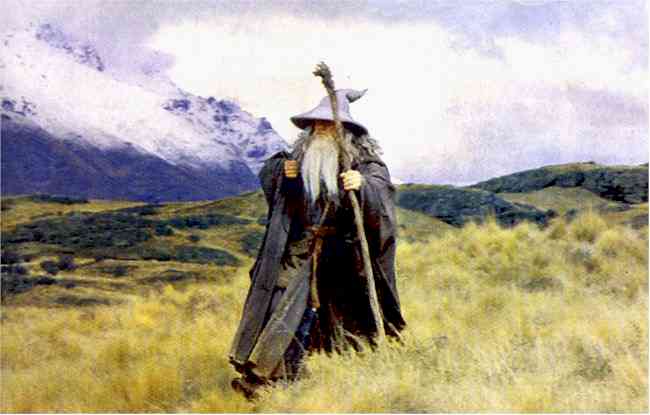
With all the feelings of gratitude I've had of late, I've felt a bit like a hippy. I was kind of raised by hippies. Not my parents (the professor and reverend Wills missed most of what we now think of as the 60s), but my church was a pretty peace-and-lovey place. We went on "retreats" out to the woods, and people brought acoustic guitars, and we'll leave it at that for now. (Perhaps my parents saw this as making up for lost time?) I don't believe all Unitarian Universalist congregations had quite the same flavor of far-out-itude as mine. Our first minister carried a walking staff during the children's services (he was pretty old, though [he is still my mental image of Gandalf {the Grey}]). UUs really are some of the most loving people in the world, but some of us take it to a degree of tenderness that makes me want to smack them around, just a little bit. Just to alert them to the possibility that not everything in the world today is beautiful and purposeful. Yet lately, I have been one such hippy. I worry that perhaps I'm coming across as someone newly in love, who can't help but be a bit obnoxious about it.

On the up-side, this has all reminded me of my religious feeling. Don't go -- I'm not about to proselytize! By "religious feeling," I mean something that goes by many names, none of which I generally use: the Holy Spirit, zen, transcendent awareness, etc. It's a feeling of connectedness to the world, a feeling of receptiveness, and holy crap but it is a difficult feeling to maintain in New York City. This feeling would come to me in nature a lot when I was young, occasionally in church, and almost always during holidays with my family. I feel as though I have lost contact with this feeling for a good portion of the past six years, actually, and maybe more, and that's a frightening thought. I'm glad I rediscovered it.

So that's one more thing to make me all hippy-dippy grateful in general. Dang it!

This begs the question, "Where did it go?" Or, perhaps more to the point, "Why?" I mean literally begs the question, because I'm a little desperate to understand it so that it doesn't happen again, or at least for so long. This feeling is vital to my ethics, whatever role you may believe God does or doesn't play in it all. When I operate from a feeling of gratitude, I make better choices, I do more good, I feel better and more possibilities open up to me. I am a better actor, simply as a result of being a more receptive and comprehensive listener. So. With all this goodness, all this pay-off, why would such an outlook ever be dismantled, or lost?

I've been seeing an acupuncturist lately for my various difficulties related to my injury of about two years past. This has been an interesting experience for me. One of the challenges of this particular therapy is that it is, after all, meant to relax a fellow, to improve flow and movement in body and energy. Second to shouting "RELAX!" at me, embedding my muscles with dozens of needles is a uniquely counter-intuitive process for getting me to relax. I have no great fear of needles, mind; what I have is a natural tendency to resist pain through tension and sheer, torqued will. I also have a bit of a thing about being immobile, and immobility is a key component to the beneficial acupuncture experience, as I have recently (painfully) learned. So: challenges. When my acupuncturist embeds a needle in a particularly lively point, I must not tense, I must not tremble, I must not resist. I must accept the pain, I must release the resistance, I must, in other words, allow the pain to pass through me. It's the only way to move forward into healing.

I was going to write that pain is what makes maintaining a sense of gratitude so difficult, but it isn't; not really. It's our responses to pain that can make gratitude difficult. I have to acknowledge now that my years of disconnect from being "in the spirit" were largely a result of my reaction to being hurt. I closed some important parts off. It's not a reasonable response to pain, no matter how vital an act of self-preservation it may seem. It arrests life, and it causes such a narrow perspective that great opportunities can be lost, terribly harmful choices made. That's neither an excuse nor an apology -- I'm not sure I could have done things any differently had I known to. It is, however, an acknowledgement that I can improve. I have to improve. I will. Feeling grateful is stronger than a feeling of hurt, if we give it a chance.

I never would have realized any of this, never even have rediscovered my sense of gratitude, without everyone who's crossed my path since I lost it. From my parents right across the board to whatever as-yet anonymous readers here there may be. So: Thank you.

Yes, you. I mean it. Thank you.

Meet you out in the woods this weekend. Bring a guitar.

Friday, November 21, 2008

The Rest is (Busy, Noisy) Silence


{This entry is a continuation of 11/20/08, 11/19/08 & 11/18/08...}

I'm sharp enough, gang. I'm sharp enough. I'm about to be sharpened down to a nub.

Yesterday the management agency I work with called to submit me to an audition taking place this morning, for what sounds like a potentially big commercial. They got it from an agent; like, a really real agent, who I guess shops work out to them occasionally when he can't fill it. So. Why did they call me -- who's only done one industrial for them to date -- for this peculiar assignment? Well, the casting director needs someone who can do an Italian dialect, and that's what it says, right there on my resume.

Ahhhhhh. Ah.

I could have said no. I could have said, "Oh well, you know, I mostly do a comic Italian, which doesn't actually sound anything like an actual Italian person. You know, it's all, 'I'ma gonna to tella you somethin'.' Like that." I could have said that, and I didn't, and it's either because I'm greedy, or insane, or a little of both. The audition's at 10:40. I'll write more after.

Perhaps needless to say, some of my valuable time last night was spent downloading and listening to an Italian dialect sample, over and over again.

* * *

Well. That was . . . not at all worth the stress under which I put myself. Me and a camera, slate, two lines, spoken twice, and that, as they say, was that. The director wasn't even a nutter. Not remotely, and they warned me about that. I didn't even have to wait, and there was no one there. I mean . . . COME ON! <--This addressed to myself, for being such a stressed-out goob.

I have absolutely no way of knowing how well I did. Even if I thought I did particularly well, I wouldn't know, there was so little interaction. But enough of that.

One lucky upswing from this is that it sort of temporarily released my stress over tonight's work. (Oh right! I'm performing tonight!) Similar to electroshock therapy, the possibility of facing a director furious over my crap-tastic Italian dialect has zapped an interruption into my ongoing rhythm of stage fright. It is welcome. I figure I've got a good hour or so of feeling this intense relief until my anxiety back-up generator kicks in and starts running the show, and that's good enough. I can get to 3:30, when I'll be back working on the show, on this reprieve. Thanks, Powers-That-Be!

Apart from training to open my As and turn my Is into Es, last night was spent very similarly to how I imagined it yesterday. Which is a hell of an accomplishment, because I feel I'm at that level of stress that gets disruptive to my entire being. I'm sure most of you can relate; particularly the air-traffic controllers in my vasty readership. I'm talking in my sleep, getting awoken by cramps, having trouble focusing on one thing for an extended period and generally losing my place all over. It's silly, I know. I'm working on it, but in the meantime, I managed to rig my props and cobble a costume together and dub my sound effects and music last night instead of running around my general neighborhood, clucking like a chicken and clawing at litter with my sneakers. I didn't run the piece at all, and it wasn't until this morning that I played with my new props a bit, but there truly wasn't time.

A lot of this stress has been self-generated. Yes, it's a last-minute, original performance, but it's also all of ten minutes long and I've no idea who will actually see it -- likely no one who will have an immediate and profound effect on my creative and professional life. Plus I do exactly this kind of work ALL the TIME. Some could handle this with greater panache, and some wouldn't even feel stressed at all. Not THIS guy, though. (sigh...) Without getting self-aggrandizing, some of it has to do with how important the work is to me. Without getting self-deprecating, some of it has to do with a finely honed sense of insecurity. Add a dash of general excitement at being allowed to make stuff up and show it to people, and you've got a giddy stress souffle just ripe for voracious consumption!

A lot is waiting on today's pre-show tech time and run. It had to. There was just little way for me to work things out without the space itself and all its quirky accoutrement. So this afternoon will tell the tale, and adjustments will likely be numerous and made as I go. I think I might even be able to relax into it a bit, if I try hard enough. Er, uh: if I don't try hard . . . enough. Wait. Oh, to hell with it. A relaxed person, I am not. But I do enjoy good, hard work, and I've plenty of that to do, which is always better than just waiting for curtain.

Of course, the end of the tale isn't until the fall of that curtain...

Tuesday, October 14, 2008

Open Up


So.

On Wednesday last (Odin's-day, oddly enough), while I was guest teaching in a high school, the school went into what was referred to as a "lock down." It was the start of second period, and the gym had just about acquired all of its students for the period when an announcement came over the loudspeaker. At least, that's what I'm told happened. I heard about it from the gym teachers, as the school-wide announcements do not penetrate the gymnasium itself, and I heard it whilst basing Friend Heather in a thigh stand for a photograph. We held until the photograph was taken, as a "lock down" doesn't particularly mean anything to us. After we got down, we asked what it meant, and were instructed that I had to go into the boys' locker room, Heather into the girls'. Okay, thought I, I'm not about to hang in the locker room; I'll go into the teacher's office.

And I did. And I wondered if I should lock the door (I understand language! [So long as it's English!]). It's a tiny office, and no one else was in there, though I could hear the raised voices of the boys in the adjacent locker room. Just as I was contemplating joining them, the male gym teacher for that period entered from there. He said a few noncommittal things to me about it being an eventful day, then turned back around and yelled at the boys to shut up, admonishing them for thinking everything's a joke, until all was silence. Then he turned back to me as if he'd barely interrupted himself and explained the situation a little better in a subdued tone. I felt bad, hearing him talk to me after he'd been so aggressive about the boys' silence, but I was also gradually coming to appreciate the motivations behind his severity.

In 1999, just a couple of months before I would graduate from college, two young men executed a plan to take their high school hostage with a murder spree that included the use of planned explosives. The whole thing was elaborately planned out, actually, and -- notwithstanding all the death and destruction wrought that day -- it could have been much worse had the plan gone accordingly. "Columbine" is now a word with tragic and unfortunate associations, probably for the foreseeable future, here in America. It's an Anglicization of the Italian colombino, which means dove, and "Colombina/Columbine" was a character popular in both the Italian and English commedia dell'arte traditions. I don't know what came first, but pictured above is a Columbine flower. Perhaps they're named for their resemblance to a dove; they characteristically hang in a shape like a dove with its wings tucked until they blossom, but they also aren't all white. Some are a rather vivid shade of red.

The main preoccupation for the gym teacher was the fact that the door out the back of the locker room seemed to be locked and he wasn't sure if he could unlock it. His feeling was that everyone would be safer in a certain back hallway, and he set about finding the key to those doors. Eventually he found it, and we all filed out of the locker room. I trailed the group, and found myself in a narrow, dim hallway that soon bent to the left and became a landing to two flights of concrete stairs that made a sort of u-turn, where there was a second, smaller landing. At the top, where I remained, were double doors that led outside and were locked with a heavy-duty wedge bar; presumably this was part of the appeal of this room, such as it was. The students all just fit on the two flights of stairs and landings, and most sat, preparing for a long wait. From the top landing, I could see everyone but a couple of boys at the base. It was cramped once people sat, but no one thought of spreading out a bit back toward the direction from which we came. We waited.

I went to one of these mega-schools that were popular to build in the 70s -- James W. Robinson Secondary School. Robinson, as we and everyone in the area called it, was named in honor of a certain Sergeant James W. Robinson, Jr., the first Virginia resident to receive the Congressional Medal of Honor in the Vietnam conflict. The school is massive, and it needs to be to hold the some 4,000 students day in and day out. I found its size intimidating when I first arrived (in spite of attending the almost equally massive Lake Braddock Secondary for two years), aggravating throughout my middle years there and ultimately it became a weird point of pride in my final months there and thereafter. I would never have admitted this at the time, though. I felt largely oppressed by my circumstances, due to too many factors to get into just now, not the least of which was simply a seeming inability to understand that I was going through profound changes. I turned it around just before my senior year, but up until that time I was increasingly falling into stereotype (or archetype, if you will). You know the type. I kept to myself as much as I could. I even took to wearing the ubiquitous black trenchcoat.

The students had already changed into shorts and t-shirts for their gym classes, and the stairwell was pretty chilly. By and large, they were very well-behaved. It was only natural that their whispering would occasionally escalate, and we'd remind them, or they'd remind each other, with a "shh!" The teacher explained to me, as I tried to look responsive without actually making any sound (I wanted to avoid any hypocrisy, and figured that lacking any rapport I ought to lead by example), that they ran drills in lock-down procedure frequently -- too frequently, he felt. It made the students take it less seriously than they ought. Then again, this particular time could be a case of an aggravated parent on campus, or perhaps a building search for contraband. He didn't name the other possibility. He didn't have to. He went on to explain that they didn't hear all the announcements in the gym, certainly not in the stairwell. So, periodically he would call his fellow gym teachers on his cell phone to see what they knew. He even called someone at the elementary school (a separate building). No one had any information for him. We shushed the students again, and he told them all to just relax.

I've been pretty quiet in my 300+ entries to date on the subject of September 11, 2001, but that's not because I'm at all removed from the experience. On bad days, I'm avoiding it; on good days, I'm rising above and moving on. Both explanations are to say that it was the kind of event that one never quite epitomises in description. You had to be there, as the old comic excuse goes. What I can say about that day, for myself, is that it has a lasting and highly personal effect on me. It's a little darkly humorous for me, these people who advertise "Never forget." The memory of it lives at the back of my head like a patient worker, occasionally pressing his button or pulling his lever. I was rather alone that day: new guy at a temp job in Rockefeller Center, the phones mostly didn't work, giving me only the briefest opportunities to touch base with my girlfriend in Brooklyn, I was trapped for hours in Manhattan, picking up news from car radios and strangers' conversation. Eventually I found my way to the apartment of the only person I knew at the time who lived on the island. He wasn't really a friend of mine, but of my girlfriend's, and his place was packed with strangers watching the news. Sitting silent on a stool there, I worried about my dad in D.C., and relived the surreal morning, with its evacuation from the 50s down the twisting, disused fire stairwell of 30 Rockefeller Center. It seemed like we'd never get to the bottom.

When the bell for change of classes rang, no one needed to be shushed. It seemed to remind everyone that time was passing, and the longer we had to wait, the more likely it seemed that whatever motivated our lock-down was a dire circumstance. Minutes after the bell rang, the whispering started up again amongst the boys. As our time in the stairwell passed the hour mark, I stretched against the railing and the cold, and some of the students began to be more aggressive in their efforts to make sense of the situation, or at least lighten the mood. Some were playing a silent game (save for occasional involuntary victory cheers) that involved flicking out digits on both hands against one another. Some asked me who exactly I was; they'd never gotten an explanation on what they were doing in class that day. Others tried to nap or discuss quietly. One young man seemed to continually take it on himself to take charge of the mood and, by and large, he was pretty good at disrupting expectation and continuity with his joking. He seemed popular with the class, in a jester kind of way. Soon, talking to no one in particular, his kidding turned to half-serious plans for what to do when someone burst in with an automatic weapon. It was on everyone's mind. You'd occasionally hear one of them add a onomatopoetic gun noise to his whispered conversation. The jester was still trying to be light, but he was scared too, and losing his audience, boys getting variously agitated into signs of despair, or aggression. So I took a gamble. "Hey, seagull," I said in a normal tone of voice (he was wearing a t-shirt with a seagull silhouette on the front), then whispered, "If you're going to plan for us, whisper it." Then I offered a wry smile, hoping he'd get me. He did, simultaneously embarrassed at being caught out and pleased with the attention and the hushed chuckles of his peers. The tension did not stay away for long before mounting again.

After about a hour and a half of nothing, we got the call that the lock-down was over, and we could return to our third-period classes. It didn't quite engender the relief you might imagine, though everyone was pleased to march out from the chilly stairwell. We all returned to the locker room and changed, then walked out into the brightly lit gym to learn what we could. The students quickly took to the halls to access their community of gossip. Heather and I soon learned that the official announcement had actually stated that classes could take place -- just in the same locked room, until further notice. None of the gym teachers heard that. I felt a little ashamed at my relief over not having had to teach an hour-and-a-half gym class, but not at my hiding with all the men. It was the only sensible course of action, given the information we had. As we watched students flow out from the doors that faced onto a windowed hallway, one of the gym teachers said, "Look at the cop car pulling away. See that dog in the seat? It must have been a drug search." We went on to teach an abbreviated third period before leaving campus for lunch, a necessary diversion. The beginning of our last class for the day, seventh period, was interrupted a few minutes in by an announcement from the principal. He congratulated everyone on a clean report for drugs, including some students themselves who had been pulled from their classrooms. In something of a tangent, he went on to admonish those older students who were violating traffic laws when driving off school property, and let them know that they could expect an increased police surveillance along the road at that hour. "But overall: good job today."

When I was in high school, I was often very angry. I was also, often, terrifically depressed. I'd have a lot of answers for you if you asked me why, and I believed in them very much. I was creating so much -- my world view, my appetites, my self -- at such a frenzied pace that it was important to me to know the things I knew. We complain a lot about teenagers' personalities, but in terms of life stages it's really where the rubber meets the road, more often than not. All that ambitious, energetic emotion for learning that children have meets all that complex, interactive consequence that adults enjoy. It's confusing even without the sea change that released hormones bring to . . . well, everything. It's exciting. It's terrifying. Particularly for those of us who've been through it already, and understand the potential for disaster, and feel responsible for them.

It's hard to write about this without offering some sweeping verdict on it all (harder still, in some respects, not to relate it back to government or religious issues). That's not what I'm writing for, though. I'd like to avoid that. Instead, I mean to do what I do with other, less traumatic events here at the Aviary. That is, write out my experience in an effort to come to some kind of better understanding about it. Opinions must enter into it: I don't agree with using a "lock down" as any sort of practical device for something other than an immediate emergency. To wit, I disagree with using it to facilitate investigation, or set an example for teenagers to let them know they stand a chance of being caught at something. Yet I appreciate its necessity for preparedness. It seems extreme, but if you read the details of the Columbine incident, it's evident that the scenario was disastrously mismanaged by the authorities. Of course it was -- it was virtually unprecedented. And if the authorities have to shape up procedurally, so ought the schools. We drill for the potential of fire, of earthquake. This is another kind of natural disaster.

But. "Natural" does not mean it is without cause. Quite the opposite, in fact. I've read the details, and I saw Elephant in the theatre, and I wore a black trenchcoat through high school, and played Doom and fantasized about all sorts of socially morbid scenarios, and I still don't presume to explain the reasons behind Klebold and Harris' actions. What I do mean is to suggest that regularly cowering in a darkened room and being forbidden to speak might, just might, be more a part of the problem than of any sort of solution. Giving a society (and what else is high school than a constantly evolving society?) a little information and then turning their ignorance back on them as a kind of preemptive punishment, that's frustrating. In fact, revolutions have been begun for less. Unfortunately, most teenagers aren't yet capable of revolution, of the organization and long-view perspective required to make a social change. What they are capable of is making louder, more extreme choices until someone hears them. Hell: Most of my so-called choices in high school, in retrospect, were little more than reactions. Teenagers are exceptional at reacting, and we discount that ability at our, and their, risk.

Let people talk. Listen. Please.